
Categories
How to Prepare Financially Before Making an OfferPublished July 8, 2026
How to Prepare Financially Before Making an Offer

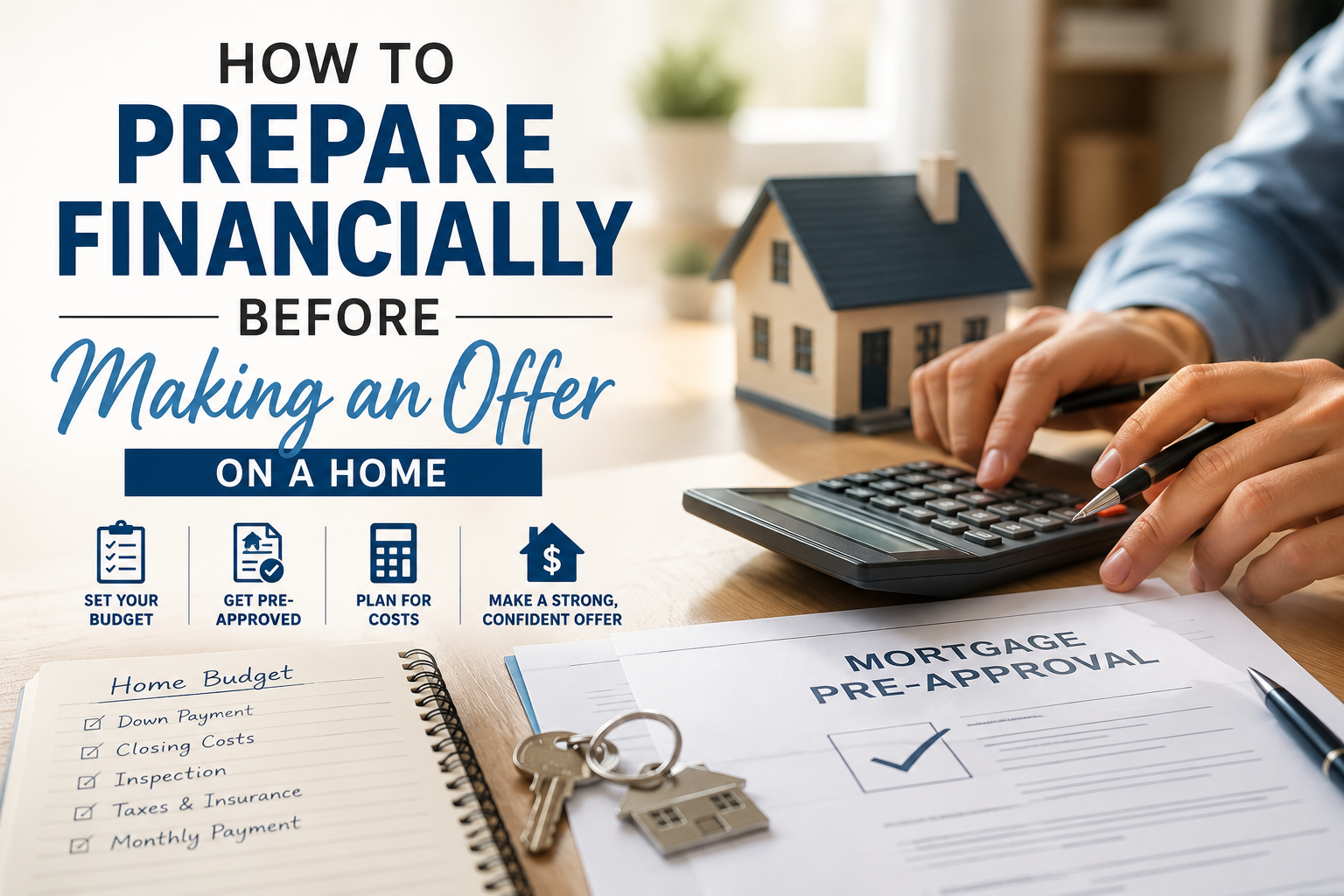
How to Prepare Financially Before Making an Offer on a Home
Preparing financially before making an offer on a home helps you move faster, avoid surprises, and make a stronger decision when the right property appears. Buying a home is exciting, but an offer is not just about choosing a price. It is about knowing your loan options, monthly payment, down payment, closing costs, inspection expenses, and savings after closing.
Here is the simple truth: a home that looks affordable online may feel very different once taxes, insurance, HOA fees, and closing costs are included.
That is why buyers should get financially organized before they fall in love with a home. The more prepared you are, the easier it is to make an offer with confidence instead of panic.
In this guide, you will learn the key money steps to take before making an offer, including how to set your budget, get pre-approved, check your credit, prepare for upfront costs, and avoid financial mistakes before closing.
How much home can you comfortably afford before making an offer?
You can comfortably afford a home when the full monthly payment fits your income, expenses, debt, savings goals, and lifestyle. The listing price matters, but the monthly payment is what you will live with.
HUD explains that what you can afford depends on your income, credit rating, current monthly expenses, down payment, and interest rate. That means your budget should include more than just the mortgage principal and interest.
Your monthly home payment may include:
- Mortgage principal and interest
- Property taxes
- Homeowners insurance
- HOA fees, if the home has them
- Private mortgage insurance, if required
- Utilities
- Maintenance and repairs
Key takeaway: Do not build your budget around the highest number a lender may approve. Build it around the payment you can comfortably manage.
Ask yourself: can I still pay my regular bills, save money, handle emergencies, and enjoy life with this payment?
That question matters because buying a home should create stability, not monthly stress.
Image Suggestion: A buyer comparing income, bills, and projected mortgage payment on a worksheet.
Alt Text: “Homebuyer reviewing affordability before making an offer on a house.”
Why should you get pre-approved before making an offer?
You should get pre-approved before making an offer because it helps you understand your price range and shows sellers you are a serious buyer. In many markets, sellers are less likely to take an offer seriously if financing is not already reviewed.
A mortgage pre-approval usually means a lender has reviewed key parts of your financial picture, such as income, debts, assets, credit, and employment. It gives you a clearer idea of what loan amount may be possible, although final approval still depends on underwriting, appraisal, property details, and closing conditions.
The Consumer Financial Protection Bureau recommends preparing before shopping for a home and mortgage by checking your credit, assessing your finances, setting your budget, and gathering paperwork.
To get pre-approved, your lender may ask for:
- Pay stubs
- Bank statements
- Tax documents
- Credit information
- Employment details
- Debt information
- Identification
- Asset documentation
This step can help you shop with more confidence. It can also help your agent write a stronger offer when you find the right home.
Key takeaway: Pre-approval gives you clarity before you negotiate.
Image Suggestion: A buyer holding a mortgage pre-approval letter while reviewing home listings.
Alt Text: “Mortgage pre-approval letter before making an offer on a home.”
How does your credit score affect your home offer preparation?
Your credit score can affect your mortgage options, interest rate, monthly payment, and loan approval. Checking your credit early gives you time to correct errors and avoid surprises.
Before making an offer, review your credit reports and look for anything that seems wrong. If you find an error, start the correction process as soon as possible. Even small changes to your credit profile can affect your loan terms.
You should also protect your credit during the home buying process. Avoid opening new credit cards, buying a car, financing furniture, or taking on large new debt while preparing to buy.
Why does this matter? Because lenders may recheck your credit before closing. A new loan or credit card could change your debt-to-income ratio or delay your approval.
Key takeaway: Keep your credit steady from pre-approval through closing.
Image Suggestion: A buyer checking a credit report on a laptop before making an offer.
Alt Text: “Buyer checking credit score before making an offer on a house.”
How much should you save for a down payment?
You should save enough for the down payment required by your loan program, plus closing costs, inspections, moving expenses, and savings after closing. The right down payment depends on your loan type, lender, and financial goals.
Many buyers still believe they need 20% down, but that is not always true. Freddie Mac states that its HomeOne® mortgage is available to qualified first-time homebuyers with a low down payment of just 3%. Some loan options may require more or less depending on the buyer and property.
Your down payment money also needs to be easy to document. Lenders usually want to see where funds came from, especially if you are using savings, gift funds, or money from another source.
Before making an offer, ask your lender:
- How much down payment do I need?
- Will I have mortgage insurance?
- How will my down payment affect my monthly payment?
- Can I use gift funds?
- What documents do you need for my funds?
- Should I keep my money in one account?
Key takeaway: Your down payment should be planned, documented, and ready before you make an offer.
Image Suggestion: A savings jar labeled “Down Payment” beside a home purchase checklist.
Alt Text: “Down payment savings before making an offer on a home.”
What closing costs should buyers plan for before making an offer?
Buyers should plan for closing costs such as lender fees, title fees, appraisal fees, recording fees, taxes, prepaid interest, homeowners insurance, and escrow items. These costs are separate from the down payment.
The Consumer Financial Protection Bureau says buyers should consider down payment funds, emergency savings, moving expenses, repair money, and closing costs when deciding how much to spend on a home. In other words, the offer price is only one part of the total financial picture.
Closing costs can vary by location, lender, loan type, purchase price, and contract terms. Your lender can provide estimates, and your real estate agent can help you understand which costs are common in your market.
Before making an offer, ask:
- What are my estimated closing costs?
- What is my estimated cash to close?
- Can the seller contribute toward closing costs?
- Are there prepaid taxes or insurance costs?
- What happens if my closing costs change?
Key takeaway: Do not wait until closing week to understand your total cash needed.
Image Suggestion: A buyer reviewing a closing cost estimate with a calculator and laptop.
Alt Text: “Buyer estimating closing costs before making an offer.”
What is earnest money, and should buyers prepare for it?
Earnest money is a deposit that shows the seller you are serious about buying the home. Buyers should have this money available before making an offer because it is usually due shortly after the offer is accepted.
Earnest money is often held by a title company, escrow company, attorney, or brokerage, depending on your local process. If the transaction closes, it may be applied toward your down payment or closing costs.
The amount can vary by market, price range, and seller expectations. In some areas, a small deposit may be normal. In more competitive markets, a larger deposit may make the offer look stronger.
Ask your real estate agent:
- What earnest money amount is typical here?
- When is it due?
- Who holds the deposit?
- How is it protected under the contract?
- What could cause a buyer to lose earnest money?
Key takeaway: Earnest money should be ready before you make an offer, not after you win the home.
Image Suggestion: A buyer signing an offer with a note about earnest money deposit.
Alt Text: “Earnest money deposit prepared before making a home offer.”
Should buyers budget for inspections and appraisals before making an offer?
Yes, buyers should budget for inspections and appraisals before making an offer because these costs may come up soon after the contract is accepted. Planning ahead helps you avoid feeling caught off guard.
A home inspection helps you understand the condition of the property. An appraisal helps the lender evaluate whether the home’s value supports the loan amount. Depending on the property, you may also need specialized inspections, such as pest, sewer, roof, septic, well, mold, or structural inspections.
Inspection and appraisal costs can vary by property type, location, and provider. Your agent and lender can help you understand what is typical in your market.
Would you rather be surprised later, or feel ready from the start?
Plan for possible costs such as:
- General home inspection
- Appraisal
- Pest inspection
- Sewer scope
- Roof inspection
- Septic or well inspection
- Radon or mold testing, if relevant
- Follow-up specialist evaluations
Key takeaway: Offer preparation should include the costs that happen after acceptance, not just the price you offer.
Image Suggestion: A home inspector checking a property while a buyer takes notes.
Alt Text: “Home inspection costs buyers should plan for before making an offer.”
How much money should you keep after closing?
You should keep enough money after closing to cover moving costs, repairs, furniture, utility setup, maintenance, and emergencies. Spending every dollar to buy the home can create stress after you move in.
This is one of the most common financial mistakes buyers make. They focus on getting enough money to close, but forget that ownership begins the moment they get the keys.
Even a well-kept home may need small updates or unexpected repairs. You may need tools, cleaning supplies, window coverings, paint, lawn equipment, appliances, or furniture.
Try to keep a separate cushion for:
- Moving expenses
- Utility deposits or setup costs
- Immediate repairs
- Basic furniture or household items
- Lawn care or tools
- Emergency savings
- Maintenance during the first few months
Key takeaway: A strong financial plan protects you after closing, not just before closing.
Image Suggestion: A moving box beside a checklist of post-closing expenses.
Alt Text: “Buyer planning moving costs and repair savings after closing.”
What financial mistakes should buyers avoid before closing?
Buyers should avoid big purchases, new debt, job changes, missed payments, and undocumented money movement before closing. These changes can create loan problems even after an offer is accepted.
Once you are under contract, your lender may continue reviewing your finances until closing. That is why it is important to keep your financial situation stable.
Avoid these moves unless your lender approves them first:
- Buying a car
- Financing furniture
- Opening new credit accounts
- Making large cash deposits
- Moving large amounts between accounts
- Changing jobs
- Missing payments
- Co-signing a loan
- Spending money needed for closing
The Federal Trade Commission recommends shopping around and comparing mortgage details and terms from several lenders or mortgage brokers before choosing a loan. Once you choose a lender and move toward closing, stay in close communication before making any financial changes.
Key takeaway: When in doubt, ask your lender before making a money move.
Image Suggestion: A buyer reviewing a “do not do before closing” checklist.
Alt Text: “Financial mistakes buyers should avoid before closing.”
How do you compare your offer price with your real budget?
You compare your offer price with your real budget by looking at the monthly payment, cash needed to close, repair expectations, savings after closing, and your comfort level. Winning the home should not mean losing financial peace of mind.
In a competitive market, it can be tempting to stretch higher just to beat other buyers. Sometimes that may make sense, but only if the numbers still work.
Before making an offer, review:
- Offer price
- Estimated monthly payment
- Estimated cash to close
- Down payment amount
- Closing cost estimate
- Earnest money deposit
- Inspection and appraisal costs
- Possible repair needs
- Savings left after closing
Ask yourself: if this offer is accepted, will I still feel stable?
That simple question can prevent buyer’s remorse later.
Key takeaway: A strong offer should be competitive and financially responsible.
Image Suggestion: A buyer comparing an offer price with a monthly payment estimate.
Alt Text: “Buyer comparing home offer price with personal budget.”
Why should buyers work with the right real estate and lending team?
Buyers should work with the right real estate and lending team because a smart offer depends on accurate numbers, local market knowledge, financing clarity, and strong communication. You do not have to figure out every detail alone.
A trusted real estate agent can help you understand offer trends, seller expectations, local costs, and negotiation options. A good lender can explain loan programs, estimated payments, down payment requirements, closing costs, and documents needed for approval.
Together, your agent and lender can help you answer important questions before you make an offer:
- Can I afford this monthly payment?
- How much cash will I need?
- Is the offer competitive for this market?
- Are seller concessions realistic?
- What contingencies should I understand?
- What deadlines should I prepare for?
This is where the right guidance can save time, reduce stress, and help you avoid expensive mistakes.
Key takeaway: A smart offer is built with real numbers and trusted advice.
Image Suggestion: A buyer meeting with a real estate agent and lender to review offer numbers.
Alt Text: “Buyer working with real estate and lending team before making an offer.”
How can an AI-Certified real estate agent help buyers make a smarter offer?
An AI-Certified real estate agent can help buyers stay organized, compare home details more efficiently, and understand the offer process with clearer communication. The value is not the technology alone. The value is how smart tools support better service.
Before making an offer, buyers may need to compare listings, review disclosures, understand local competition, estimate next steps, and move quickly. An agent using AI-supported tools may be able to organize information, summarize key details, prepare clearer communication, and help buyers stay focused on homes that fit their needs.
That can be especially helpful when you are trying to make a confident decision under time pressure.
Still, AI should support personal guidance, not replace it. A strong agent brings local experience, negotiation skill, market knowledge, and human judgment to the process.
Key takeaway: The best buyer experience combines smart tools with trusted local expertise.
Image Suggestion: An AI-Certified agent reviewing home comparison details with a buyer on a tablet.
Alt Text: “AI-Certified real estate agent helping buyer prepare a smarter home offer.”
What is the simple money checklist before making an offer?
The simple money checklist before making an offer includes knowing your budget, getting pre-approved, checking your credit, saving for upfront costs, and keeping extra money for after closing. This checklist helps you move quickly without rushing blindly.
Before making an offer, make sure you have:
- A comfortable monthly payment range
- Mortgage pre-approval
- Credit reviewed and protected
- Down payment funds ready
- Closing cost estimate reviewed
- Earnest money available
- Inspection and appraisal funds set aside
- Moving and repair money planned
- Emergency savings after closing
- Lender approval before major financial changes
- A trusted agent and lender guiding you
Buying a home is exciting, but preparation is what turns excitement into confidence.
Key takeaway: When your finances are ready, your offer can be stronger, calmer, and smarter.
Image Suggestion: A printable home offer financial checklist with checkmarks.
Alt Text: “Financial checklist before making an offer on a home.”
Be ready before you find the right home
Preparing financially before making an offer can save you time, stress, and money. Start by knowing your real budget, getting pre-approved, checking your credit, saving for upfront costs, and keeping extra money for move-in needs.
When your finances are ready, you can make an offer with more confidence. You will know what you can afford, what cash you need, and what steps to take next.
Thinking about buying a home soon? Talk with a trusted local real estate professional and lender before you start touring homes. The better prepared you are, the smoother your home buying journey can be.
Frequently Asked Questions
Should I get pre-approved before making an offer on a house?
Yes, you should get pre-approved before making an offer because it helps you understand your price range and gives sellers more confidence in your offer. Pre-approval also helps you identify possible loan issues before you are under contract. The CFPB recommends preparing before shopping by checking your credit, assessing finances, setting a budget, and gathering paperwork.
How much money do I need before making an offer?
The amount you need depends on your loan type, down payment, closing costs, earnest money, inspection costs, appraisal costs, and savings after closing. Your lender can estimate your cash to close, and your agent can explain common local costs. It is smart to prepare for both the money needed to buy the home and the money needed after you move in.
Can I make an offer without a down payment ready?
It is usually not a good idea to make an offer before your down payment funds are ready and documented. Lenders often need to verify where your money came from, and sellers may want confidence that you can close. If your funds are coming from a gift or another source, ask your lender what paperwork is needed before making an offer.
What costs come after an offer is accepted?
After an offer is accepted, buyers may need to pay for inspections, appraisal, earnest money, homeowners insurance, and eventually closing costs. Some costs happen quickly, so planning ahead matters. Ask your agent and lender for a timeline so you know what is due and when.
What should I avoid financially before closing?
Before closing, avoid large purchases, new credit accounts, job changes, missed payments, large cash deposits, and moving money without asking your lender. These changes can affect loan approval or delay closing. When in doubt, contact your lender before making any financial move.
Internal Link Opportunities
Use these only if you have real live pages on your website:
- home buying budget → Link to your buyer budget guide
- mortgage pre-approval → Link to your pre-approval blog or lender prep page
- down payment → Link to your down payment assistance or buyer financing guide
- closing costs → Link to your buyer closing costs article
- home inspection → Link to your inspection checklist
- first-time home buyer → Link to your first-time buyer resource page
- contact a trusted local real estate professional → Link to your contact page
Sources Used
- HUD, Buying a Home
- Consumer Financial Protection Bureau, Preparing to Shop for Your Mortgage
- Consumer Financial Protection Bureau, Figure Out How Much You Want to Spend
- Consumer Financial Protection Bureau, Shopping for a Mortgage
- Freddie Mac, HomeOne® Mortgage
- Federal Trade Commission, Shopping for a Mortgage FAQs
Get In Touch

Kevin Kalbach
Broker | Kevin Kalbach Group | Realty Executives Cornerstone
or another way